2 aggressive 401(k) tweaks could kick-start participation levels

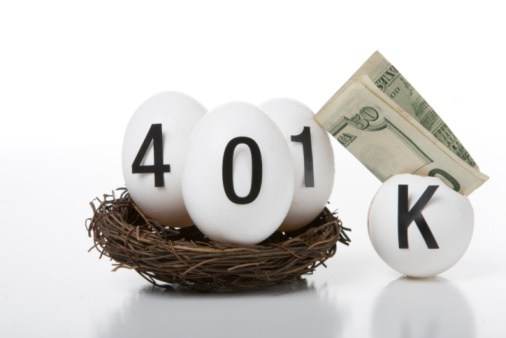
Study after study confirms that most workers aren’t setting aside nearly enough money for retirement. As a result, an increasing number of individuals are prolonging their retirement. This can have a drastic effect on employers, so is it time for firms to get more aggressive?
At the Association for Financial Professionals Conference in Denver, HR Benefits Alert attended a presentation titled “Retirement Plan Boot Camp: Fiduciary Risk Management for Financial Professionals,” by Gary R. Johnson and Michael W. Kozemchak.
During the presentation, Kozemchak made a compelling case for why employers need be more aggressive in helping employees prepare for retirement.
Here’s the problem: Older workers cost firms significantly more in healthcare costs — as much as $6,500 per year — and have higher disability rates than their younger counterparts.
Plus, when older employees put off retirement, they hurt employers’ succession planning. Younger employees have to wait longer to move up the ranks, and some lose patience and look for opportunities elsewhere.
Stretching the standard rates
To help prevent the retirement delay, Kozemchak suggested employers look toward a change to the traditional 401(k) match structure.
The most common 401(k) match companies offer is fifty cents on the dollar up to 6% of an employer’s contribution.
Many employees will contribute up to the amount at which they can get the full match and then stop. Employers can take advantage of this by “stretching” the match. Instead of matching up to 6% of employees’ contributions at 50 cents on the dollar, employers may want to try matching up 10% or even 12% of workers’ contributions at 25 cents.
Another area in which Kozemchak saw room for improvement: auto-enrollment.
The average plan will auto-enroll employees at 3% of their salary and automatically bump up (i.e., escalate) that amount by a percentage point each year. Problem is, that low starting point puts workers well behind where they should be.
A much stronger auto-enrollment structure would start employees at 6% and bump contributions up annually until workers were in the 10% to 15% range.
- Share on


Free Training & Resources
White Papers
Provided by UJET

Further Reading
Pay transparency legislation is picking up even more momentum in 2025. In Illinois and Minnesota, new laws went into effect on Jan...
The Biden administration is delaying finalization of a controversial Securities and Exchange Commission (SEC) rule on climate change-relate...
Misclassification risk becomes a financial problem as soon as regulators decide contractor oversight looks like employee management. Case i...
Twenty-five Republican state attorneys general are taking aim at the Department of Labor’s rule on retirement plan investing. The ...
A Denver-area restaurant is paying nearly $62,000 after a DOL investigation uncovered tip retention and recordkeeping violations in violati...
Employee experience – including employee mental health – has become a higher priority for many organizations, according to rese...


