Sexual harassment: 12 warning signs you have a company culture that’s more vulnerable to it

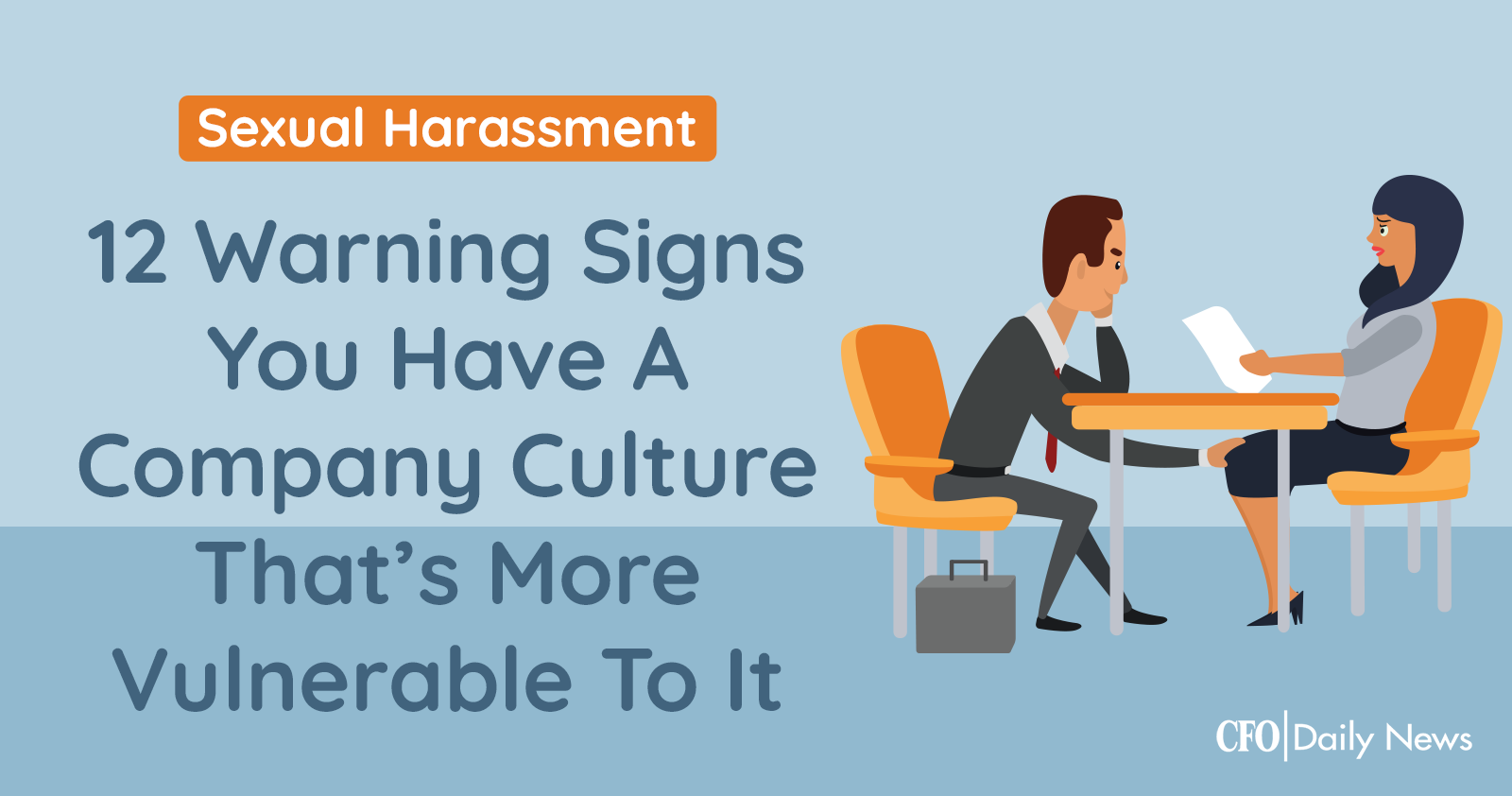
Of course you know: Sexual harassment can happen in any workplace. But it turns out it happens in some workplaces more than others. Is yours one of them? Here’s how to tell.
A task force from the Equal Employment Opportunity Commission (EEOC) conducted a study on harassment at work. And it identified a host of risk factors that make sexual harassment more likely.
Harassment costs companies every day, and not only in the legal expenses to deal with a claim. The consequences include everything from increased absences and decreased productivity to turnover. And none of those are cheap. Which means it’s well worth making sure your culture doesn’t unintentionally leave you exposed.
Signs your company is at heightened risk for harassment
Your own company may be more at risk if your workplace is:
- When almost everyone in an office has similar backgrounds, it’s all the easier for those who don’t “fit in” to be targets.
- Has employees who don’t conform to workplace norms. Again, those folks tend to get excluded or become vulnerable.
- Contains cultural or language differences. These often isolate those in the minority, which makes them vulnerable.
- Have “course” social discourse outside of work. That’s how lines get blurred and inappropriate behaviors creep in.
- Are comprised of many young workers. That’s not to say older employees don’t harass, but it’s a trend the EEOC spotted.
- Have folks who don’t think the rules apply to them. That’s a dangerous mindset to have. Often these are “high value” employees who tend to feel untouchable.
- Contain significant power disparities. When the divide between the top of the org chart and the bottom is vast, that dynamic opens the door to trouble.
- Relies on customer service or customer satisfaction.
- Has monotonous work or a large proportion of low-intensity tasks. Too much free time can get people focusing their attention where they shouldn’t.
- Isolated in their workspaces. Similar to monotonous work, when people are isolated physically from their co-workers, they can focus their attention in improper ways.
- Tolerates or even encourages alcohol consumption. Obviously when inhibitions go down, inappropriate behavior goes up.
- Fewer checks and balances mean bad behavior is more likely to start and less likely to be reported.
So what do you do if your company has several of these risk factors? As a leader in your organization you want your radar up even further, especially when it comes to any specific employees who fit the bill above.
You may also want to take another look at the training your company currently offers both supervisors and employees to make sure it’s up to date in today’s post-#MeToo world. It’s well-worth the effort and the investment.
- Share on


Free Training & Resources

Further Reading
Talk about a swift kick in the you-know-where! President Biden stopped at a Sheetz convenience store on a recent campaign stop. Biden order...
The Financial Accounting Standards Board (FASB) is calling on publicly traded companies to report employee compensation. And that’s n...
An urgent care facility in Georgia has agreed to pay $113,199 to resolve alleged violations of the federal Fair Labor Standards Act (FLSA)....
A joint letter signed by the attorneys general of 16 states clarifies their support for DEI programs, noting the “important role of d...
Senior political advisor Stephen Miller is busier than ever since leaving the Trump administration. Miller is squaring his sights on compan...
As a finance professional, you can probably imagine the stress of an EEOC investigation and lawsuit. Two new reports from the agency show j...


