New law changes Form W-2 filing deadlines for next year

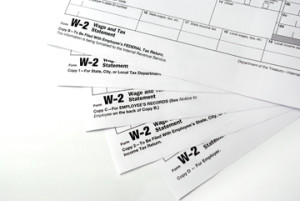
Employers will have less time next year-end to send Forms W-2 to the SSA, even if you’re an electronic filer. That’s because of a new law.
The Protecting Americans from Tax Hikes (PATH) Act of 2015 was passed by Congress and signed by President Obama in December.
The filing deadline will change, starting with the 2016 forms. The deadline for getting Forms W-2 to employees and the SSA will be Jan. 31, 2017.
So you’ll no longer have the chance to make last-minute corrections before sending the forms to the SSA.
De minimis dollar amounts
In light of the shorter W-2 deadline, you’ll be glad to know the PATH Act contains a safe harbor from penalties if errors are de minimis. Starting with the 2016 forms, you’ll find relief for:
- withholding errors up to $25, and
- other errors up to $100.
Although you won’t have to submit a corrected return to qualify for the safe harbor, an employee can ask you to give him or her a Form W-2c and to file Copy A with the SSA.
4 steps Payroll can take
Once you have W-2s taken care of for Tax Year 2015, here’s what your Payroll department can do to prepare for next year-end, knowing that the earlier deadline will require you to bring your “A game”:
- Find out whether you have updated versions of the following forms: W-2, W-2AS, W-2GU, W-2VI, W-3, W-3SS and W-3PR. The IRS said some 2016 forms posted on its website for informational purposes before Dec. 30, 2015 had to be revised to reflect the new deadlines.
- If you use a year-end checklist, determine what adjustments you’ll need to make to meet the earlier deadline next year-end.
- Consider ways to find errors sooner rather than later. For example, keep an eye out for discrepancies between your payroll records and Form 941 on a quarterly basis.
- Let Accounts Payable know the accelerated deadline will also apply to Form 1099.
- Share on


Free Training & Resources

Further Reading
Is your company a joint employer, subject to trickier overtime compliance issues? If you don’t ask that question, employees might do ...
High inflation continues to impact businesses. One of the latest examples? Costlier penalties for breaking workplace laws. Several federal ...
Paying employees by direct deposit is convenient for all involved. But a recent court case is a reminder that funds could end up in cybercr...
How much will employers have to pay for any penalties related to tax year 2023 forms, including W-2s and other information returns? Weâ€...
Looks like AI won’t be taking the place of all those vacant jobs after all. CEOs at bigger companies — some who laid off a lot ...
Crooks have more tactics for committing payment fraud at their disposal than you think. For example, these are just the different types ...


