Supreme Court goes pro-employer in high-stakes pay case

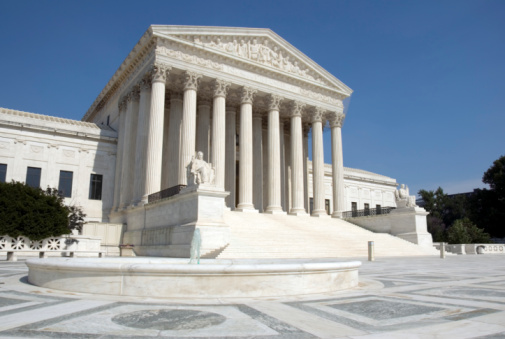
The highest court in the country just issued a ruling in a case that could’ve had huge implications for employers everywhere.
Fortunately, the Supreme Court took a pro-employer stance in this one – although it does open the door to potential issues down the road.
Clothes or safety gear?
The case was Sandifer v. U.S. Steel Corp., and it involved workers who claimed they should’ve been paid for the time they spent putting on and taking off their safety gear.
Before the case wound up in front of the Supreme Court, the feds had said any time workers spent “changing clothes” could be excluded from compensable time, unless a union contract stated otherwise.
U.S. Steel’s contract didn’t include anything about paying workers for changing clothes. But workers argued they weren’t changing “clothes,” they were actually putting on safety gear.
The High Court’s unanimous ruling: The time workers spent changing clothes isn’t compensable because safety gear generally fits within the definition of clothing.
No definitive list
The Court did say that items like safety glasses, ear plugs and respirators generally aren’t viewed as clothes and should be considered safety equipment.
And Justice Antonin Scalia acknowledged that a ruling separating different clothing items from safety items would create problems for judges in future cases.
As it stands, the Supreme Court failed to spell out exactly what counts as safety gear and what doesn’t. It did, however, categorize the 12 items listed in the U.S. Steel lawsuit as either safety gear or clothing.
Because all safety gear isn’t considered clothing, we’re likely to see more “changing clothes” lawsuits down the road. And lower courts will have to look to the Supreme Court’s ruling in this case for guidance.
- Share on


Free Training & Resources
White Papers
Provided by Anaplan

Further Reading
A federal investigation forced a contractor to pay nearly $600,000 in back wages and damages after the Department of Labor uncovered system...
It’s a wildly astronomical number, and we’re not trying to scare anyone – but a recent case from New Jersey shows that employee miscl...
Pay transparency legislation is picking up even more momentum in 2025. In Illinois and Minnesota, new laws went into effect on Jan...
Lyft Inc. recently agreed to pay more than $2.1 million to settle a lawsuit filed by the federal government. Here’s what happene...
A North Texas company made a very expensive mistake. It misclassified workers as contractors and didn’t pay them for overtime put in....
Back pay probably isn’t the first thing that comes to mind when you think of ADA violations, especially if the employee never claimed...


