Court’s pro-employer pay verdict contradicts other key rulings: What it means for Finance

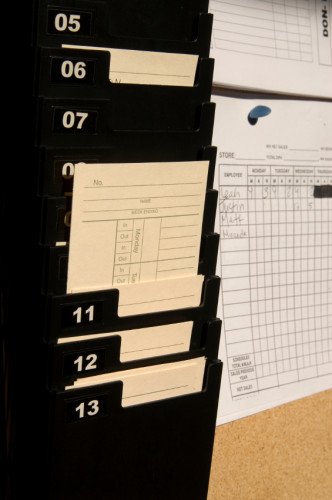
Rounding nonexempt employees’ hours for pay purposes has always been a risky practice, and the feds have been cracking down on many firms that employ this practice. But does that mean you should avoid rounding altogether?
Not if you do correctly.
Take it from one California employer that just came out on the winning end of a lawsuit on the subject.
Paid too little … and too much
In a class-action suit, Utne v. Home Depot U.S.A., Inc., Home Depot employees called its timekeeping system to task because when employees punched out, it rounded their time to the nearest quarter hour.
Sometimes that undercompensated them, but sometimes it overcompensated them.
And that’s what made a California court side with the home giant.
When the company presented expert testimony analyzing five years of the rounding practice, it could prove that 57% of the shifts were either overpaid or unaffected by rounding.
So if you do round time for easier tracking, make sure it can – and does – go both ways consistently.
The DOL’s radar
Of course, employers should always be extra careful when rounding.
Here’s an example why: During a presentation at the 2017 SHRM Conference in New Orleans, attorney and former administrator of the DOL’s Wage-and-Hour Division, Tammy McCutchen, warned employers that the DOL has decided to put the practice of rounding hours under the microscope.
Why? In most cases, the DOL claims rounding actually winds up hurting employees.
It also doesn’t hurt that it’s easy an easy target for DOL investigators to spot during their reviews.
Scheduled vs. actual hours
Here’s a really life example to show just how costly this issue can be for employers who end up on the wrong side of a DOL investigation.
The DOL investigated Quik Park, a company that operates 138 parking garages in the New York City area, and uncovered a number of FLSA and overtime violations that stemmed from its rounding practices.
According to the agency, the company rounded its employees’ hours and programmed its timekeeping system to automatically record their scheduled work hours instead of the actual hours worked they put in.
That proved costly, and Quick Park wound up paying $296,836 in back wages to affected employees.
Be ready to back it up
Employers that don’t want to give up rounding need to be prepared to prove the rounding doesn’t have an overall negative effect on employees.
Key: The FLSA allows staffers’ time to be rounded to the nearest quarter hour. Time from 1 to 7 minutes may be rounded down, and time from 8 to 14 minutes must be rounded up.
- Share on


Free Training & Resources
Webinars
Provided by SkyStem

Further Reading
The U.S. Supreme Court’s 2024-25 term opened this week – and several employment issues are already on the docket. Here are six...
A restaurant chain has paid $618,666 in back wages to 779 employees and an additional $100,000 in penalties after the Department of Labor (...
A federal court in Texas has dismissed a challenge to the IRS regulation governing lock-in letters, leaving withholding directives issued t...
Private and public employers will want to reconsider imposing a vaccine mandate the next time a public health crisis occurs. A federal cour...
So is the long-predicted recession near — or here already? Depends on who you ask. The traditional bellwether of a recession, gros...
Employee misclassification can create liability that follows the business. Case in point: New Jersey has reached a settlement with STG L...


