FMLA leave: DOL’s take on how far you can go to enforce your company’s call-in policy

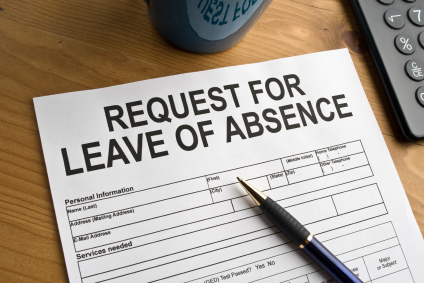
Enforcing your company’s call-in procedures is one of the few weapons you have to prevent employees from abusing their FMLA leave.
After all, when changes to the FMLA were made back in 2009, the DOL specifically stated that employees on leave must follow employers’ call-in policies.
According to the FMLA regs:
“… When the need for leave is not foreseeable, an employee must comply with the employer’s usual and customary notice and procedural requirements for requesting leave, absent unusual circumstances . . . If an employee does not comply with the employer’s usual notice and procedural requirements, and no unusual circumstances justify the failure to comply, FMLA-protected leave may be delayed or denied.”
That reg essentially says employees can’t justify why the call-in procedures weren’t followed, employers have the right to delay or even deny the leave.
Sounds simple, right? Not so fast.
Like all things FMLA, the DOL tends to favor a pro-employee approach even if it flies in the face of its own guidance. And not understanding the DOL’s complex stance on this topic could wind up costing your company a small fortune.
Employers’ responsibilities
FMLA Insights founder, FMLA expert and employment attorney Jeff Nowak recently advised a DOL investigator about an employer that actively enforced its call-in procedures.
The employer in question had suspected the employee on intermittent FMLA was abusing his leave for a number of reasons.
The employee was often using only Mondays and Fridays to take leave (sometimes invoking the FMLA), calling just before the last possible moment to report his absence (two hours prior to the shift), etc.
When the employee failed to call-in two hours before his scheduled shifts, he was disciplined. That prompted the employee to complain to the DOL, which prompted the DOL to seek Nowak’s expertise.
While Nowak believed the company was within its rights, the DOL felt the absences were protected because the FMLA had been invoked.
The DOL pointed to an interpretation it follows regarding the FMLA’s call-in rules: That the employer must affirmatively ask the employee why he/she couldn’t follow the company’s call-in procedures.
Extra steps to prevent costly legal headaches
Eventually the DOL agreed that the employer was in the right.
But, as Nowak pointed out, the DOL may still require you to go the extra mile and find out why workers on FMLA leave aren’t following the established call-in procedures.
That means it’s probably in employers’ best interests to take certain extra steps to avoid a problem in this areas. Those steps:
- Start a discussion. If an employee seeking FMLA failed to follow your call-in procedures, ask that employee why. It’s an added step that may be well worth it in the long-run.
- Update your policy. Adding language to your FMLA policy warning employees they must provide a reason (aka “unusual circumstance”) as to why they couldn’t follow your call-in policy is another safeguard.
- Consistently enforce procedures. Your procedures should be clear (in the handbook and personnel policy) and consistently enforced.
Adapted from “Got an Employee Who Doesn’t Follow Your FMLA Call-in Policy? Apparently, You Now Have to Ask Him Why He Couldn’t,” by Jeff Nowak.
- Share on


Free Training & Resources
White Papers
Provided by Anaplan

Further Reading
Full disclosure: We never know for certain which topics will grab the attention of CFOs, controllers and other finance professionals. O...
A recent – and unanimous – U.S. Supreme Court ruling is good news for employers. The Court decided that employers are not required to m...
With a new year comes new state laws with compliance challenges that could disrupt business as usual. In addition to the minimum wage hi...
CEOs, CFOs and departmental managers all get used to fielding “urgent” email and text message requests. If you’re lik...
What are the three hardest words for any leader to say? If you’re thinking, I don’t know, guess what? You nailed it. Mos...
Some of the biggest companies are ending their diversity, equity and inclusion (DEI) initiatives — and doing so quickly. Brown-Fo...


